01 February 2014

Paleography makes my brain hurt so good


A large part of genealogy is reading old documents. The problem is, that shi* is hard. The good part is, that means that if we study it and master it, people will pay us to read things for them! And that shi* is awesome.

But the learning process, man. I love/hate it.

The National Archives of the UK is a godsend for wanna be paleographers. On their website, they have 10 (huge, enormous, challenging) documents (letters, wills, court documents, etc) that give you a mini-lesson on, and then walk you through as you transcribe each, line by line.

I'm currently working on "the registered probate copy of the will of Thomas Pike, a shipwright, dated 15 February 1722/3 (Catalogue reference: PROB 11/593 quire 196)"

Aka this hot mess:
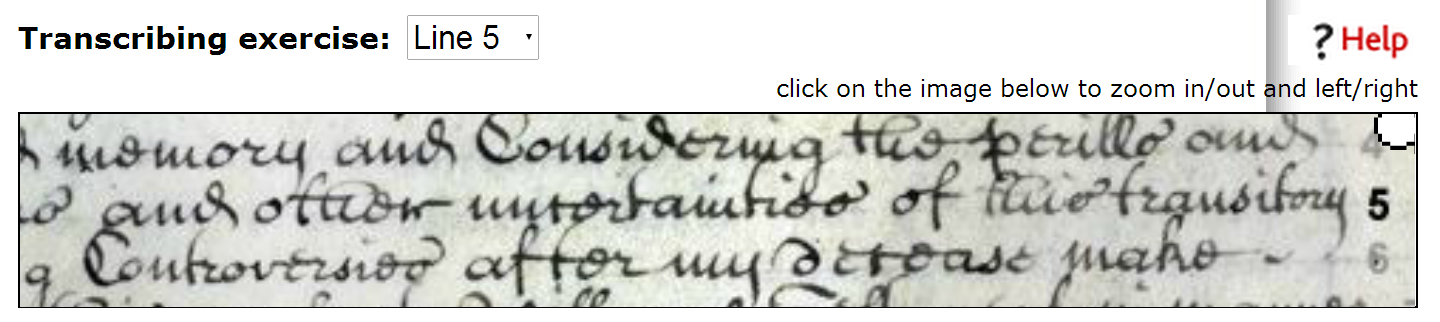


Can you read line 5 there? BECAUSE I CAN'T.

(Yet!)

I did pretty well on the first document (Princess Elizabeth I's letter to her sister Queen Mary) and so I'm kind of surprised at how ABSOLUTELY AND UTTERLY LOST AND CONFUSED I am on this will. It's incredible how much handwriting changes over time and based on location. Which, while making me shake my metaphoric cane at this damned lesson, just confirms how important it is that I actually start taking paleography seriously as a dedicated genealogist.

So, what about you? Have you studied paleography? Have you mastered the National Archives's educational brain torture? Do you know how to properly make the word Archives into a possessive? I am seriously considering the University of Strathclyde's Msc in Genealogical, Palaeographic, and Heraldic Studies, and I also have the book Reading Early American Handwriting (if your research extends into early America, you should get this book!). I need to sit down and work on it some more when I move and am able to retrieve all of my belongings out of storage, but as for now I find this online tutorial from the National Archives (UK) to be the best study of old handwriting available. And it's free! Free is also awesome!

PS: Line five there says "and other uncertanties of this transitory"  -- if you got that on your own, you are a much better wo/man than I!

08 January 2014

Genealogy Goals for 2014


Personal Goals:

  • Get my mother's, son's, & paternal aunt's (my father passed away a long time ago) DNA tested. And possibly my paternal uncle's DNA as well if I can get back in touch with him.
  • Get my paternal grandmother's copy of Final Verdict by  Adela Rogers St. Johns. The book is about St. John's father, Earl Rogers, and my paternal grandfather's aunt was his second wife. The book apparently mentions my great and great-great grandmother a number of times as well. I want to get the copy of that book & also transcribes the parts that describe my ancestors.
  • Trace the decendancy of my paternal-line immigrants.
  • Have current information for all of the descendants of my maternal great-great grandparents. 
  • Write the main Hixson family researcher whose work I find all across the interwebs & local libraries.
  • Get (buy or print if available online) all the possible certificates for my parents, grandparents, and great-grandparents!
  • This:
Organizational Goals:
  • Find a good way to back things up on paper (I know, TEH HORROR!) and organize files, and then do eet.
  • Decide on a software program to use! Ugh. Really I want to design my own, but I have -1000 desire to learn how to code.
  • Standardize my OneNote files as much as possible. (I DO love OneNote, but I don't count that as a regular genealogy program, I just use it heavily)
Professional Goals:
  • Write 3 articles to submit to professional journals
  • Join APG
  • Go to a conference or similar meeting
  • Join a local genealogy society
  • Get a professional website 
  • Get business cards! 
  • Have at least one new client a month
  • Advertise!
  • Learn how to properly utilize courthouse records for genealogy.
  • Figure out how to utilize the Family History Library local branch(es) to check out research material.
Travel:
  • Visit Bedford/Fulton Co, where my PA ancestors lived.
  • Visit the national archives!
I might even start working towards a MSc in Genealogical, Palaeographic and Heraldic Studies through the University of Strathclyde's distance learning program! :-o I am so, so excited at this prospect, guys! But 3 years? Dang. D: And so much money.... but I think i'm going to do it!

I'm sure I'm forgetting a bunch. Did you make a similar resolution list? Link me up in the comments!

05 November 2013

Video Post: Genealogy Meme from Geniaus

Stealing the idea of doing this via videa from Catie (Genealogically Speaking & Young & Savvy), I, too, have made a video of my answers to Jill's (Geniaus) genealogy meme.

I ended up talking a bit more about my family than intended, so pardon the length. Whoever can get the furthest into this video before exiting out gets a cookie!

Aaaaaaaaand sorry for the shakiness. I'm a bit of a spaz, you see...

28 October 2013

Tell to me this: What are the 5 most useful records in genealogy? (Sans the obvious)

I'm about to send out for a land patent application packet for one of my clients' ancestors in the hopes that it will tell me where he's from. I've never dealt with land patent applications before, so I'm excited to get some experience with something new!

And, it made me think. I wonder what other super useful records are out there that I haven't used or don't know about?  Birth, christening, marriage, death, obituary, burial, and census records all go without saying, so let's not say them, and say other things instead.


In the comments below, tell to me this: What are the top 5 records (or evidence of any kind) that you find are the most useful and informative in genealogy research?